

A Level Geology
Geology is all about the Earth around you, how it works and how we can look after, and use it in a sustainable way. You’ll study a range of material including geohazards, dinosaurs and many amazing minerals. Geology rocks!

TOP COURSE HIGHLIGHTS
- Passionate, dedicated staff
- Excellent specimen collection
- Lab and fieldwork exercises

Practical, hands on
Geology is a very practical, hands on course. Our specimen collection is extensive and includes some exceptional fossils such as a dinosaur footprint and egg as well as examples of all of the minerals, rocks and fossils you will be expected to become familiar with.

extensive field work
Our field work offer far exceeds the minimum expected by the exam board and includes a residential trip to the Jurassic Coast, which our students widely agree is one of the most exciting parts of their time with us, as it is where geology ‘becomes real’ and the experiences give opportunities to make lifelong friendships.

superb job opportunities
Geologists are right at the top of the Government’s UK Shortage Occupation List, and so job prospects and pay are excellent.
Truro College Geology Students Exhibit Groundbreaking Hydrogen Research at the Royal Society in London
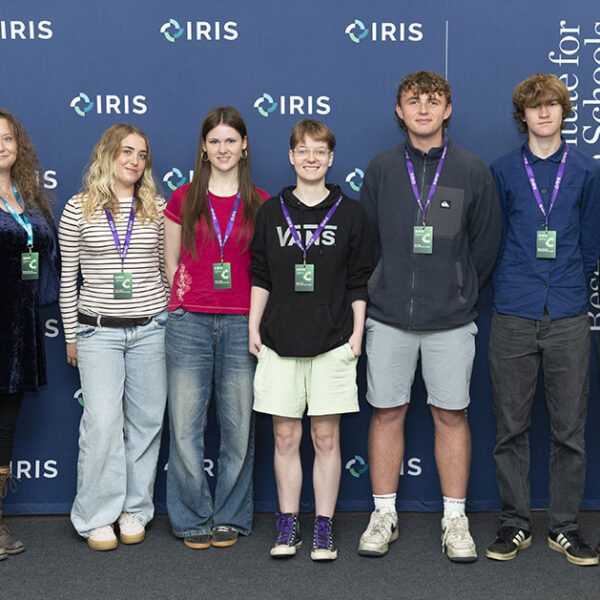
Students from Truro and Penwith College travelled to London to present their research at the prestigious Royal Society Summer Science Exhibition. Their project, titled “Is There Naturally Occurring Hydrogen Gas in Cornwall?”, was developed through the Royal Society’s Partnership Grants Scheme over the past year.
The Summer Science Exhibition is the UK’s premier public science event, hosted by the Royal Society—the country’s national academy of science. Truro College students shared their work alongside 13 outstanding research groups and more than 300 scientists from across the UK, presenting their findings to some of the world’s most eminent researchers, Fellows, and visitors.
WHY CHOOSE THIS COURSE?
Geology is the science of the Earth and involves the study of exciting topics including volcanoes, earthquakes, fossils, and minerals as well as important theoretical insights, for example plate tectonics. It is the foundation of everything we know about the Earth’s past which can lead us to understanding the processes that are currently affecting the planet and how we can protect it in the future. The skills and knowledge you acquire on this course will help you to understand that geology is the solution to many of the crises currently threatening planet Earth.
Do you wonder which forces drive volcanoes, earthquakes, and tsunamis? Are you fascinated by fossils and their evolutionary roots? Have you ever wondered where gold, diamonds and other natural resources come from? Are you concerned about the environmental consequences of the extraction of oil and gas or radioactive materials? Did you enjoy physical geography at school? If the answer to any of these questions are yes, then geology may be the subject for you.
WHAT WILL I LEARN?
In your first year you will investigate the Earth from its meteorite origins through to the range of rocks found in its different layers and surface environments. You will study the immense forces that might circulate rocky material through the inside of the Earth and move the surface plates around, leaving huge cracks and folds behind as evidence of past activity. You will discover how geologists need a multitude of different skills to accurately measure and describe features in the environment. Through field trips in Cornwall and further afield in the UK, you will develop these skills for yourself.
WHERE WILL IT TAKE ME?
This course is designed to lead to Higher Education or into an Apprenticeship in any geoscience related course such as engineering, environmental science, palaeontology, oceanography, exploration, geophysics, geography, astrophysics, marine sciences, planetary sciences, or hazard management. With further training this could lead to many careers within a variety of fields.
Geologists are required in the oil industry, mining, materials science, hydrogeology (water resources), civil engineering, geotechnical engineering, public services, geohazard prediction and mitigation, scientific research (e.g. climate change, seismology) and education. Employment prospects are currently excellent, 26 out of 86 careers on the government’s UK Shortage Occupation List are geologists.
There will be 3 written exams, covering all content covered over the 2 years – component 1 Geological investigations (35%), component 2 Geological principles and processes (30%) and component 3 Geological applications (35%) written paper.
Practical endorsement based on lab and field skills developed over the two years.
Minimum of 5 GCSEs Grades 4 or above, including Grade 5 in English and Maths and at least one of GCSE Chemistry, Physics or Biology Grade 5 or GCSE Combined Science Grades 55.
You will be expected to undertake at least 4-6 hours of independent study time per week. Throughout the year you will be able to access additional support through drop-in sessions, dedicated revision workshops, tailored 1:1 provision, as well as a variety of additional opportunities to stretch and challenge the most able students. We encourage you to proactively engage with the support available in order to reach your full potential.
PLEASE NOTE – Students with physical disabilities are able to complete the course as there are plenty of accessible geological outcrops that can be incorporated into the field programme. Please contact the college for a detailed discussion of your needs to allow advance planning to be put in place.
Students are required to provide themselves with a full set of waterproofs (coat and trousers) and a pair of walking boots, along with the cost of the Jurassic Coast field trip. However, help and advice can be given for this and cost should not be prohibitive for anyone.


