

T Levels
T Levels are a Level 3 qualification that combine theory and practical learning with an industry placement of 45 days. They have been developed in collaboration with employers to ensure the content meets the needs of industry to prepare students for work. A T Level is equivalent to three A Levels.

What makes T Levels different?
Experience with a real employer in a real workplace allows you to apply the skills and knowledge you learn in the classroom to the job, giving you a taste of the world of work you expect once you complete your studies. Around 80% of your time will be spent at college, with the remaining 20% being spent at your placement. This differs to an Apprenticeship, which is typically 80% on-the-job and 20% in the classroom.
New T Levels are being introduced every year with current subject specialisations including Business & Law, Computing & IT, Construction, Education & Teacher Training and Health & Social Care.
T Levels will be of particular interest to students thinking about employment or a higher-level Apprenticeship on completion. They are highly respected as a recognised vocational qualification equivalent to three A Levels for progression to higher education.

HOW LONG IS IT?
A T Level is a full-time, two-year course for School Leavers.
WHAT DO I NEED?
You’ll need a GCSE in English (Language or Literature) at Grade 4, a GCSE in Maths at Grade 4 and two other GCSEs at Grade 4 (including Combined Science for Construction: Design, Surveying and Planning) or Level 2 Diploma in an appropriate subject (Merit).
WHERE WILL IT TAKE ME?
T Levels are specifically designed with leading businesses and employers to give you the knowledge and skills you need to enter the world of work after college.

T Level to Norland Nanny
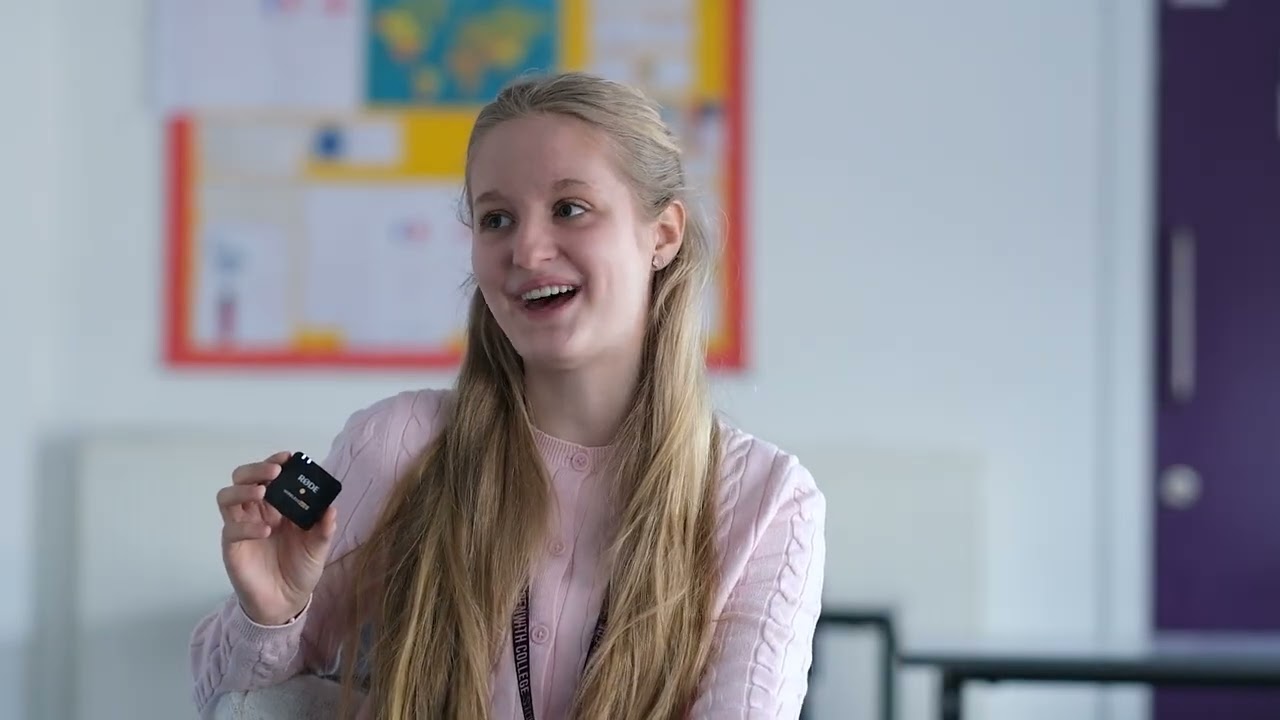
We caught up with Iris, studying the T Level in Education & Childcare (Early Years pathway), who has received an incredible offer to train as a Norland Nanny.
In this video, Iris talks about her experience on the course, the skills she’s developed, and how the T Level has helped prepare her for a career working with children.
From hands-on placements to real-world learning, the course gives students the knowledge and confidence to take their next steps into the childcare sector.
If you’re passionate about working with children and want to explore your future in early years education, hear Iris’s story and see where a T Level could take you.
FIND THE COURSE FOR YOU


Our Stories

Casey

Joel

Iris’ Story
